Tuesday, May 10, 2011

We need to have an alternate system to promote just trade and a democratic system. We must fight for a new humanism, beyond capitalism and socialism!

Day #3 LDC conference
05/10/11

“An alliance of the marginalized is the way forward. It must happen at community, country, regional, and global levels. We need to have alternate system to promote just trade and a democratic system. We must fight for a new humanism, beyond capitalism and socialism!” – Prof. Babu Mathew, Director ActionAid India

A common dialogue during the conference is neo-liberalism and capitalisms’ repeated failures. Prof. Babu Mathew, from India, gave a great presentation at a plenary today on how LDCs are struggling as result of neo-liberalism policies and capitalism. This is being emphasized through out the conference because it gets to the root cause of why LDCs are not developing.

For those of you new to political lingo the term neo-liberalism is in reference to Ronald Regan/Margaret Thatcher style of economics; the epitome of corporate gain over economic equality. The five main concepts of neo-liberalism: the rule of the market, the cutting of public expenditures for social service (welfare), unregulated markets (environmental and labor laws), privatization and replacing the concept of the public good with “individual responsibilities”.

Prof. Mathews explained that neo-liberalism forms when there is a combination of what multi-national corporations would like to do and what the industrial military complex decides to do. 

As I mentioned in my last my last report agriculture and land sovereignty play a large role in how LDCs develop. Prof. Mathews explained that post-Istanbul we need to pay close attention to agriculture sectors and support a new agricultural system. He explained: “The agriculture industrial system has failed. It is impossible for the industrial system to absorb the excess labor, specifically in developing countries. The shift to agriculture will be difficult, but necessary. Industrialization has failed the people, but has been very successful for multi-national corporations. There are movements in the global south towards local food production and the fight against corporations. Specifically we can look to India and the wide spread movement to save seeds and fight Monsanto. All attention needs to be turned towards agriculture”.

During the plenary the concept of LDCs taking ownership of their own development were discussed at length. Rudy de Mar from the organization 11/11 in Belgium carefully articulated what ownership means for LDCs:

“I have ambiguous feeling about the concept of ownership. A core component of the development process is that people must decide what happens to them. But the term ownership is often vague and a misused word in the development world. When we start talking about ownership, we are basically talking about the question of power. Ownership is not a gift thrown in your hand, you must to grab and conquer it.”.

Thus concept of “ownership” is similar to the term “empowerment”, terms that are often thrown around at UN conferences and in documents. Both concepts need to organically develop within communities and countries. A person does not become empowered by being told “we will give you A, B and C and then you will be empowered”. You have power when you decide to take power and there is a social structure that allows power to develop. This concept is transferrable to a country level, if there is global economic system that does not exploit and “own” LDCs they will have a chance be have ownership and develop at their chosen pace.

Monday, May 9, 2011

Food Sovereignty and Trade

May 9, 2011
LDC Conference Istanbul

One of the key issues for Least Developed Countries is food security and agricultural trade policies. This morning I attended a very informative meeting on trade and agriculture titled: Dangers of Trade Liberalization: WTO Doha Round and Economic Partnership Agreements and Implications for LDCs.

The meeting was sponsored by two organizations; Our World is Not For Sale (http://www.ourworldisnotforsale.org/) and the Third World Network (http://www.twnside.org.sg/agriculture_negotiations.htm). Meena Ramen, from Friends of the Earth (http://www.foe.co.uk/index.html) was a very knowledgeable and passionate speaker. Ms. Ramen raised important questions regarding certain governments’ policies of importing cheap food instead of focusing on local food agriculture. During her speech she explained the serious implication this has on countries food security, their rising food prices and jobs in the agriculture sectors.

Food security is can be defined as “when all people at all times have access to sufficient, safe, nutritious food to maintain a healthy and active life (www.who.org)”. An important component of food security (that is often left out) is food sovereignty. Food sovereignty does not advocate for food needs to be met by foreign distribution or importation of food. Food sovereignty can be defined as “the right of peoples to healthy and culturally appropriate food produced through ecologically sound and sustainable methods and their right to define their own food and agriculture systems”. It also is a “platform for rural revitalization at a global level based on equitable distribution of farmland and water, farmer control over seeds, and productive small-scale farms supplying consumers with healthy, locally grown food”.

Ms. Ramen described a series of factors that prevent many of the LDCs’ from having both food security and sovereignty. The main barrier is the result of a monopoly that northern “developed” countries have over trade tariffs and taxes on their agriculture exports to the “developing” countries in the south. For example, in the US it costs $415 per ton to grow rice. That rice is then exported out of the country for $205 per ton, as result of farm subsidies given by the US government. As result farmers in the global south are unable to compete with prices and the US grown rice (often grown by corporate farms) is artificially cheaper than rice prices in country. Case study after case study shows that the competition from cheaply subsidized imports severely displaces local farmers and food prices. This is very interrelated with gender, for many women in Africa agriculture is their lifeblood. On the continent women make up 53% of the population and 80% of them work within the agricultural economy. Thus, greedy European and American trade tariffs have a huge impact on women livelihoods and their right to decent employment. 


As result there are very serious implications for the LDCs because of trade tariffs. If the UN is really serious about strengthening rural agriculture it must be recognized that agriculture a key pillar in production capacity. There needs to be a change in trade agreements and only once that happens will the LDCs be given a fair chance have food sovereignty and security. This will be a continued discussion throughout the conference, with a high level meetings taking place on food security later on the week.

Speaking of food soverignety, after the conference ended on Sunday me and some friends (new and old!), went to the Black Sea for a BBQ. Here is a little taste of my experience in Turkey! Enjoy


Eggplant for a Sunday Evening at the Black Sea

7 small/thin eggplants
5 cloves of garlic
2 tsp of sea salt
1/2 of a small onion
3 Tablespoons of Olive Oil

Poke holes in eggplant and place them directly over coals/wood. You can also do this over a gas stove or BBQ. Flip every few minutes until skins on all side are blackeded. Let cool for 10 mins.

Peel eggplants (carefully with your hands) and take off the the blackened skins. Place the pulp in a bowl. Discard or compost the skin. Finely mince garlic and onion.
Mash together eggplant, with onions, garlic, olive oil and salt.
Get some crunchy bread, dip in and enjoy!

Saturday, May 7, 2011

Greetings from Istanbul!


view of istanbul

May 7, 2010
Least Developed Countries Conference

Day #1
Istanbul, Turkey

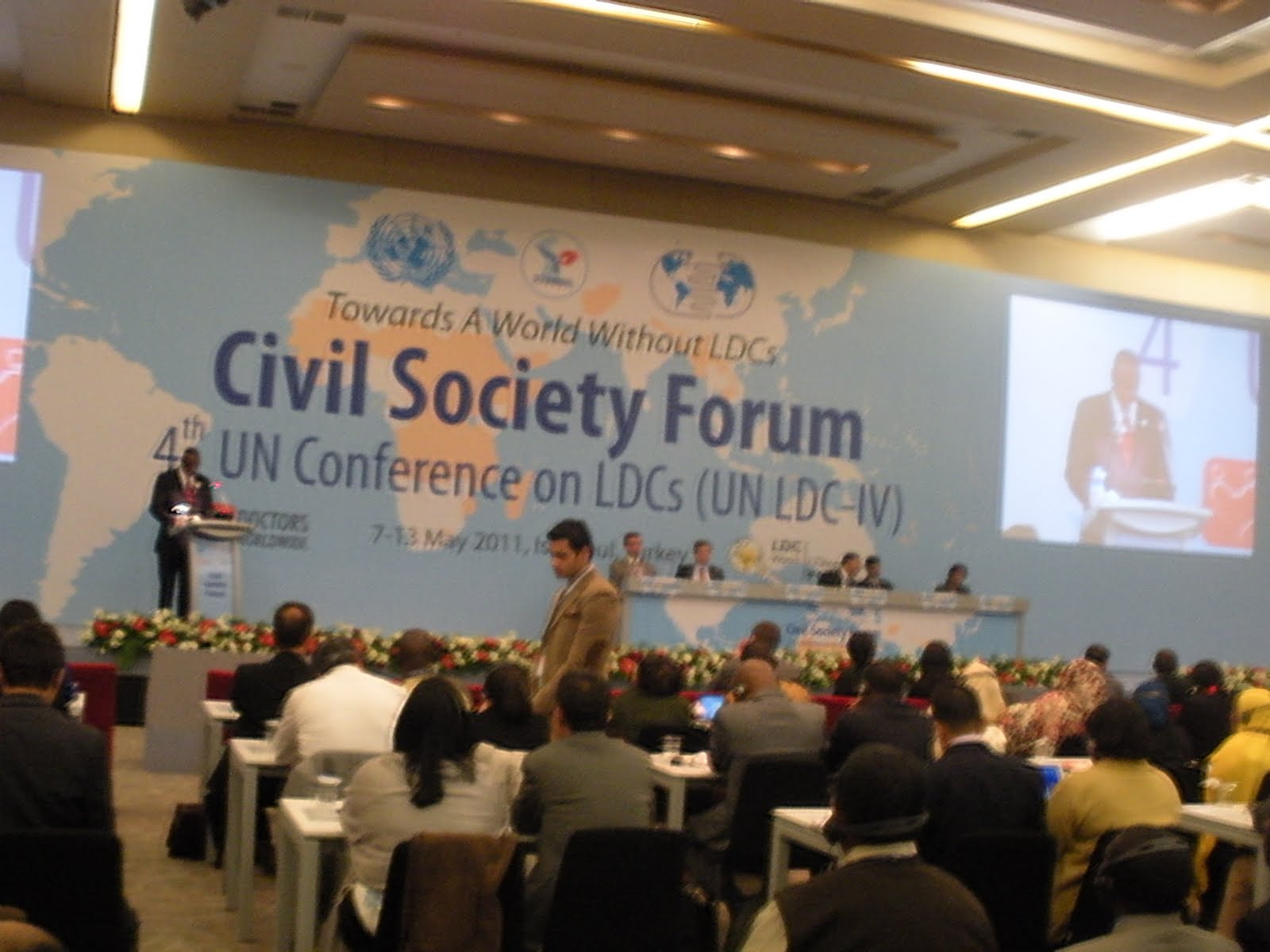
 For the next week I will be covering the Least Developed Countries conference for the Loretto Community and Feminist Task Force. This is a very important UN conference which addresses issues specifically related to least developed countries. A country is classified as an LDC by meeting the following three factors: economic vulnerability, low-income (per capita income less than $905) and human resource weakness. This will be the Fourth UN conference on the LDCs; the last conference took place in Belgium in 2001. Currently, there are 48 LDCs with a majority of them on the continent of Africa. The purpose of this conference is to assess the results of the 10-year action plan from the Belgium conference and adopt strategies for the sustainable development of the LDCs into the next decade.
 
Today was the first day of the LDC conference; the day started out with a panel and introduction to the conference. We first heard from Dr. Karamen, Chairmen of Doctors Worldwide. In his speech he explained that “we need to seek ways to fulfill our responsibility of the LDCs and that the problems faced by them are problems that face humanity as a whole.” We heard from various organizers of the conference, followed by a dialgue on the objective of the conference. During this session there was lively debate with various people from all over the world. The participants questioned the role of the LDCs and the outcomes of the conference.


this morning's meeting

One woman from a labor organization in the D.R. of Congo passionately asked the panel, “What type of action can we take after the conference? We are a drop of water in the ocean, less than 1% of NGO’s are represented here. How can we mobilize the largest number of people? Grants run our country; no one wants to listen to the people! We must begin to mobilize now and examine our role in how to end inequality for the LDCs.”


Tomorrow the official events start, and I look forward to participating, meeting people, and learning about peoples’ struggles. During my time here I look forward to examining what we at the Loretto Community can do to address international injustices.

Wednesday, December 8, 2010

La Via Campesina Camp

As I said in an early blog the Via Campesina camp is very diverse and always filled with excitement and music! There is always fresh beans, tortillas, rice and fruit to be had, or a mat to take a quick nap on. Whenever I am there and sit down to eat I am always met with a smile and an interesting story. Whether it be someone who is part of hula hooping/organic farm community in British Columbia, or somewone who takes month long biking trips around Cuba or was part of revolutoins in Central America or farms grains in the mid-west or is fruit farmer in Guatemala. Everyone is always happy to talk and share their story. Here are some pictures from the camp!


The tent where about 300 people sleep every night

breakfast discussions


you also can tent camp


info on the forum and camp: http://www.democracynow.org/2010/12/6/small_farmers_organize_in_alternative_global

¡Desea la tierra de madre viva!

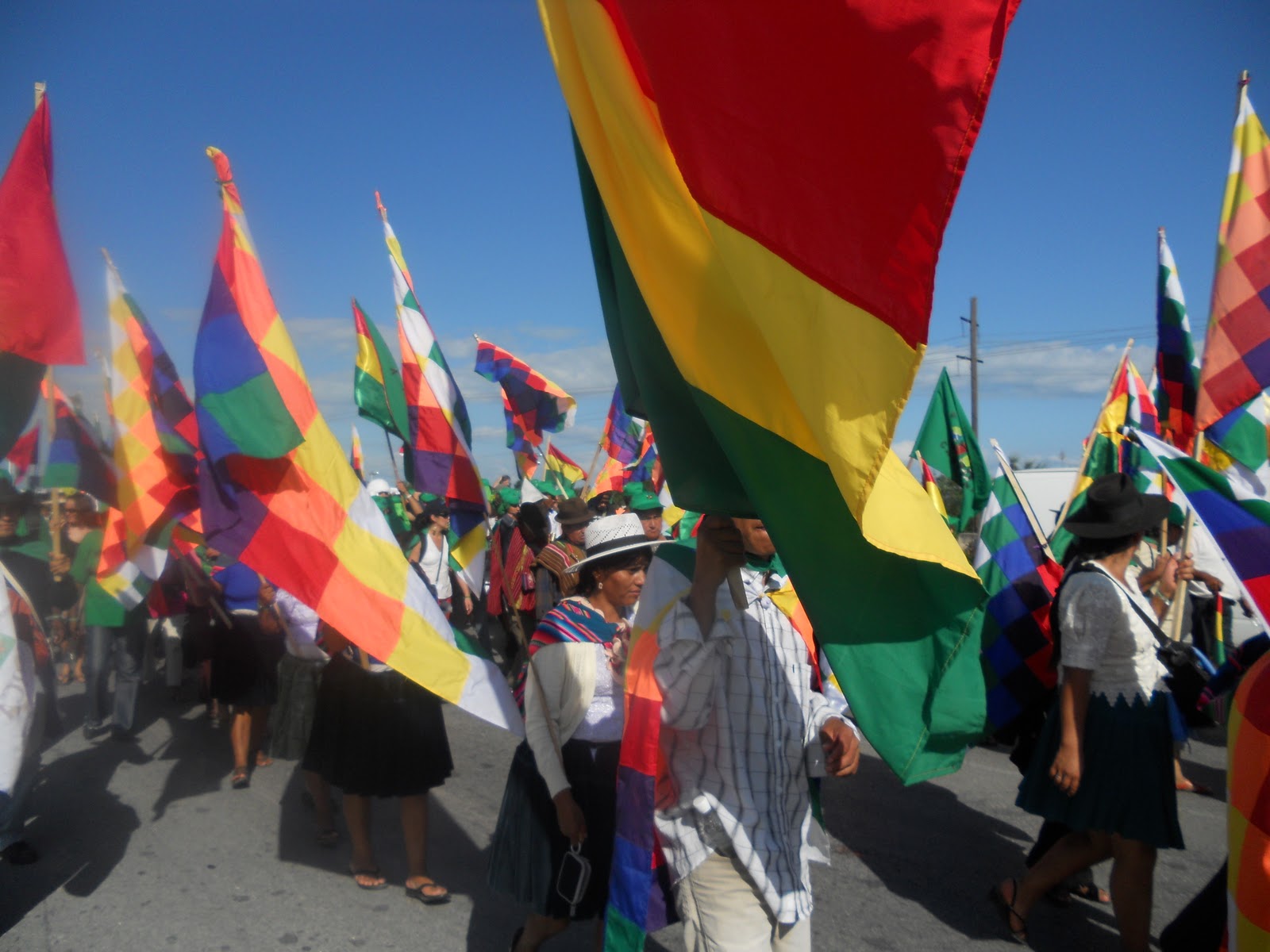
March Participants waving the Indigenous Flag of Latin America


Hi Mom and Dad!
It has been a very busy and exciting past few days in Cancun! I feel so fortunate to take part in an incredibly powerful, diverse and energetic movement. Yesterday we had a very long march in which at least 3,000 people participated! It would have been larger, but Cancun is very spread out and it difficult to mobilize/transport people around the city. All of Via Campesino and various other groups for climate justice attended.

beautiful fabric signs for non-gmo corn
I have taken part in many different political actions, never have I been part of such a diverse movement. You could really feel and see the energy of all the people participating in the march. I looked in front of me and there were beautiful women from the highlands of Bolivia waving the multi-colored flags, representing the indigenous people of Latin America. With them were men playing Andean flutes and dancing.  To my left were a group Haitians drumming and singing French/African songs. Behind me where Native Americans with the Indigenous Environmental Action Network, singing chants in deep voices. All the way in the back were a bunch of kids my age, from all over the world, traveling around in a in a beautiful multi-color bus voicing their support and holding up the back end of the march! I could go on and on talking about the different groups represented, all expressing their culture and environmental concerns in different ways.
start of march
Most importantly all groups were showing their support for the Cochabamba Accord, Climate Justice, the Rights of Mother Earth and Food Sovereignty! The diversity really exemplified how climate change is an issue that is affecting all of us and action must be taken immediately (and should have been taken decades ago). It is an issue that is the result of American consumerism/eating habits, selfish governments and multi-national corporations looking for quick fixes and high profits.
Bolivian Delegation
The march shut down a major highway in Cancun for almost ten hours and in essences put a hold on work that was going to be taking place prior to negotiations happening today (and trapped my colleagues with the Feminist Task Force at the Cancun Climate Village all day!). Rumor has it that Hilary Clinton was unable to attend meetings in Cancun because of the highways being shut down. Who knows how many communities around the world are now for the better because American colonialism of the air, forests and water may have been lessened by Mrs. Clinton’s inability to attend. In actuality it probably didn’t have that big of an effect, but we can always hope!
Bolivian Delegation with, Bolivian UN Ambassador
We walked almost 10K that day, and with the sun bouncing off the asphalt it was very hot. But spirits were high and we continued marching. The rally ended at a very heavily guarded police blockade with the Mexican Federal Police in a line of full riot gear. They also had a low-flying military helicopter circling the protest, typical, but met with chants and flag waving every time it got close to the crowd! The march was very peaceful and well organized, showing cross-cultural solidarity for just climate negotiations to take place at the COP 16. There were many speakers at the end of March, voicing their support for our solidarity and the Rights of Mother Earth!


The bus morning of March at the Via Campesina Camp
Press on March:
http://www.democracynow.org/2010/12/8/thousands_march_in_cancn_at_la
http://english.peopledaily.com.cn/90001/90777/90852/7225053.html

Sunday, December 5, 2010

End of Caravan and Arrival in Cancun

Add caption
Hola companeros! I have arrived in Cancun, after a wonderful journey from Mexico City with La Via Campesina. Friday, the 3rd, was the last leg of our Caravan. We drove through the night and arrived in Medina for a demonstration and rally. This rally was for indigenous rights, Mayan, to protect sacred land that was being taken away from them to develop a large super highway project. we also heard from various workers unoins and environmental organizations voicing their support that the Cochabamba Accord to be enacted in Cauncun. Yet again and again the rights of Mother Earth was brought up and need to protect her from greedy governments and transnational corporations.

After leaving Medina we went to Chichenitza, home of sacred Mayan pyramids, for an indigenous ceremony with the local Mayan community and members of the Pancho and Dakota American tribes. The ceremony was held to give thanks to ancestors, the brother and sisterhood of all indigenous communities from around the world and for the rights of Mother Earth. During the ceremony elderly Mayan women, were doing prostrations and prayers and aromatic inscents filled the air. The ceremony took place on day of the women according to the Mayan calendar, the day of nine threads. A women Pancho tribe member, participating in the caravan, reminded the audience: ...We woman are a mirror image of Mother Earth, we must protect her and remember her image. During the ceremony there was beautiful chanting, praying and solidarity amongst the various indigenous tribes represented. The represented tribes are thousands of miles apart but they all experience similar exploitation of thier lands and communities. During the ceremony there was a small symbolic fire on stage. A member of the Dakota tribe had a prayer for the event and for our work in Cancun:

No matter how strong the wind blows,
How strong the oppressors voice may be,
This fire will not go our, a fire from our Mother Earth
A fire that burns inside all of our indigenous brothers and sisters.
We all share the same fire, no matter where on earth you are from...
We must remember, the path of our ancestors is the most righteous path that we have. We must remember that path and use our ancient traditions to protect Mother Earth.

After the ceremony we left for Cancun and arrived the Via Campesina Camp a few hours later. The camp and forum are in a large sports complex in north Cancun. It was purposely placed there because the local authorities wanted it far away from the Blue Moon Palace,where the official conference is taking place, and other high profile events. But it is a great spot and filled with all sorts of colorful posters and strong energy! No matter who you are, a member of the Mexican liberation movement or a Canadian organic farmer or a Mayan corn farmer or a twenty something American working for an NGO, everyone sleeps, eats and talks together under the same large tent. The event is very well integrated and there is a strong sense of solidarity amongst all peoples.

The following day was the start of the Global Forum for LIfe, Social Justice in the Environment. The day started with a Mystica, a Via Campesina tradition, which was an indigenous ceremony solidifying our intentions for the event and respect for ancestors. After that there were many speakers  talking about environmental justice, rights of mother earth, what we learned on the caravans and the long fight against capitalism. I will give a longer report on the forum in my next post!

Through out the caravan Via Campesina dealt with many obstacles perfectly and I am incredibly impressed with the organization. Whether it be a road being taken over in protest, undercover police officers following the caravans, difficult delegates or illness amongst the participants on the caravan. Carlos, the main organizer of the event, was the coordinator of my bus. Everyday he cleaned the bathroom of our bus that had over 50 people, he did this with out announcements or asking for volunteers, I only noticed this was happening when I saw him carrying a bottle of bleach one day. To me this really shows the uniqueness of Via Campesina, not only is there bilateral leadership throughout the entire organization, but the main organizer does not have a poorly paid bus drive clean the bathroom, he does him self. Every thing went very smoothly and hundreds of people and caravans from all over Mexico arrived safely in Cancun to participate in activities for Climate Justice.

I end this post from a book I am reading, that talks about the struggles Mexican campesinos face because of American led Free Trade policies:
More than a way of earning a living, the campo, land, is a way of life for many Mexican campesinos. It is an ideology with roots in the pre Columbian past that has been sustained by the agrain reforms and the rheroric of the revolution. Being a campesino is different from having a job. It is a way of relating to land and community. It is a sense of place and identity not easily shaken. The campo is the heart andsoul of Mexico all readily discovered in the deep melancholy and joy for life tapped by its ranchera music, the instinctive hospitatlity of its people, the resonance of its rituals, and the easy acceptance of lifes natural rhythms
Zapata Revenge, Free Trade and the Farm Crisis in Mexico by Tom Barry

Thursday, December 2, 2010

¨The indian is rising up. We will no longer let ourselves be fooled. We have seen a change thanks to our zapatista companeros, who had the courage to awaken the country"

Buenas Dias, Companeros! Yesterday I attended a rally that was held in
Vera Cruz for all Via Campesina caravan participants, local workers
unions and environmental advocacy groups. It was a very powerful
rally. Many different organizations came and discussed environmental
abuses in their communities.

It is obvious to me that there is a strong movement here for climate
justice, specifically in regards to the Rights of Mother Earth. Every
speaker that spoke last night mentioned the rights of mother earth.
Talking about our planet as if she is an elderly grandmother that has
been abused and taken advantage of by her children.

The citizens of Vera Cruz have to face vast environmental injustices
everyday. Their struggles include dealing with rivers contaminated
with toxic pollutants, that then flood and ruin their homes. The fish
from the sea are filled with toxic chemicals and metals. The local pig
slaughter factories are paying poor wages to workers and the waste is
contaminating streams. This is not a life the members of the community
have decided to live, it was forced upon them.

All of the speakers were very passionate, here is part of a speech
from an elderly man who lives in Vera Cruz: There is a solution to our
problems. In Europe people have access to technology that allows them
to have clean water and governments provide basic services to the
population. We need to have that technology. We need to unite and ask
for respect of life. Because power is about capitalism and money.
People need to remember, Mother Earth needs us! She is giving us air
and seeds to grow our food. What are we doing to Mother Earth? What
are we doing to fight transnational companies and governments? Their
industries are changing the climate! We must make sure the the
campesinos voice is heard in Cancun! Our communities and Mother Earth
can no longer be exploited! We need to protect, love, nurture her and
remember how to live in harmony with her!

We left last night and headed to another town in Vera Cruz called
Ixhuatlan, but we had a delay along the way. The Sugar Cane workers
took over the highway we were planning on taking to Ixhuatlan. They
took over the highway to protest the government that was recently
re-elected. During the recent floods in the area the sugar canes were
devastated and the workers had no money for food or basic services.
The floods that affected the community are not common. The government
provided no assistance to the workers. Not only were their jobs were
lost, but their homes were ruined by flooding. As result of the
protest the government was highly over reactive and brought military
police and helicopters instigating a relatively peaceful protest.
Thus, our caravans went another way and we had a nine hour drive to
Ixhuatlan . The other buses who visited a different community were
held up by the protest and are now just leaving, after not being able
to get through for 8 hours. The police have been a constant presence
on this trip, all though in no way a threat. But they take pictures of
us every where we go, pull buses over and asking for registrations and
holding the caravans up. The organizers are doing a wonderful job
dealing with this and it is just a nuisance we have to deal with.


In Ixhuatlan, we were met with a warm welcome and fresh tortillas!
Ixhuatlan is a jungle like region, close to large rivers and the Gulf
of Mexico. Because of it´s proximity to water and rich natural
resources it has been heavily exploited by the government and
transnational corporations. It is also an area where there are
petroleum refineries and hydraulic energy plants, both which dump
there waste into the rivers and gulf. Here is part of a speech that
was given this morning: Today you are in one of the most contaminated
areas in the world. Here there are rivers, like many other places give
industries priority. Toxic waste go into the rivers and the sea. There
is no one here to regulate, all blind and deaf to what is affecting
us. It is normal to see toxins and expect industries to dump toxins.
The profit companies make is a white elephant in the room, it does
nothing and says keep doing. There are over a 1,000 cases of cancer in
our community, but no state intervention. Neoliberalsim is destroying
our communities. We indigenous want to protect the earth, dirt and the
land. We must work on a micro level and bring back the knowledge of
the indigenous. We have contaminated the earth and food we put in our
bodies. Caravan participants we have one objective for you UNITE,
organize! Let us, the people, take care of the planet, the earth is
for all of us!

The passion and love for mother earth is very inspiring. For the past
three days I have  seen and heard the love and respect for our Earth.
To me the struggles that these communities face is an absolute
injustice. In no way is right for a communities land to be exploited
by a transnational corporation. Particularly when the inhabitants of
community receive no payment for the exploitation of their natural
resources. Especially when their land is devastated, health effected
and livelihoods ruined. Many of the people in the communities we have
visited are fishermen and farmers, so they feel the effects of
environmental devastation immediately.

I will post pictures once I get to Cancun!

Peace, Andrea